 40+ Yrs Experience
Dr. K. Amarnath
M.B.B.S., D.C.H.
Consultant & Director
Typically replies instantly

Structured follow-up for premature babies, low birth weight infants and NICU graduates — tracking growth, feeding and development at every milestone, guided by experienced specialists and a caring team.
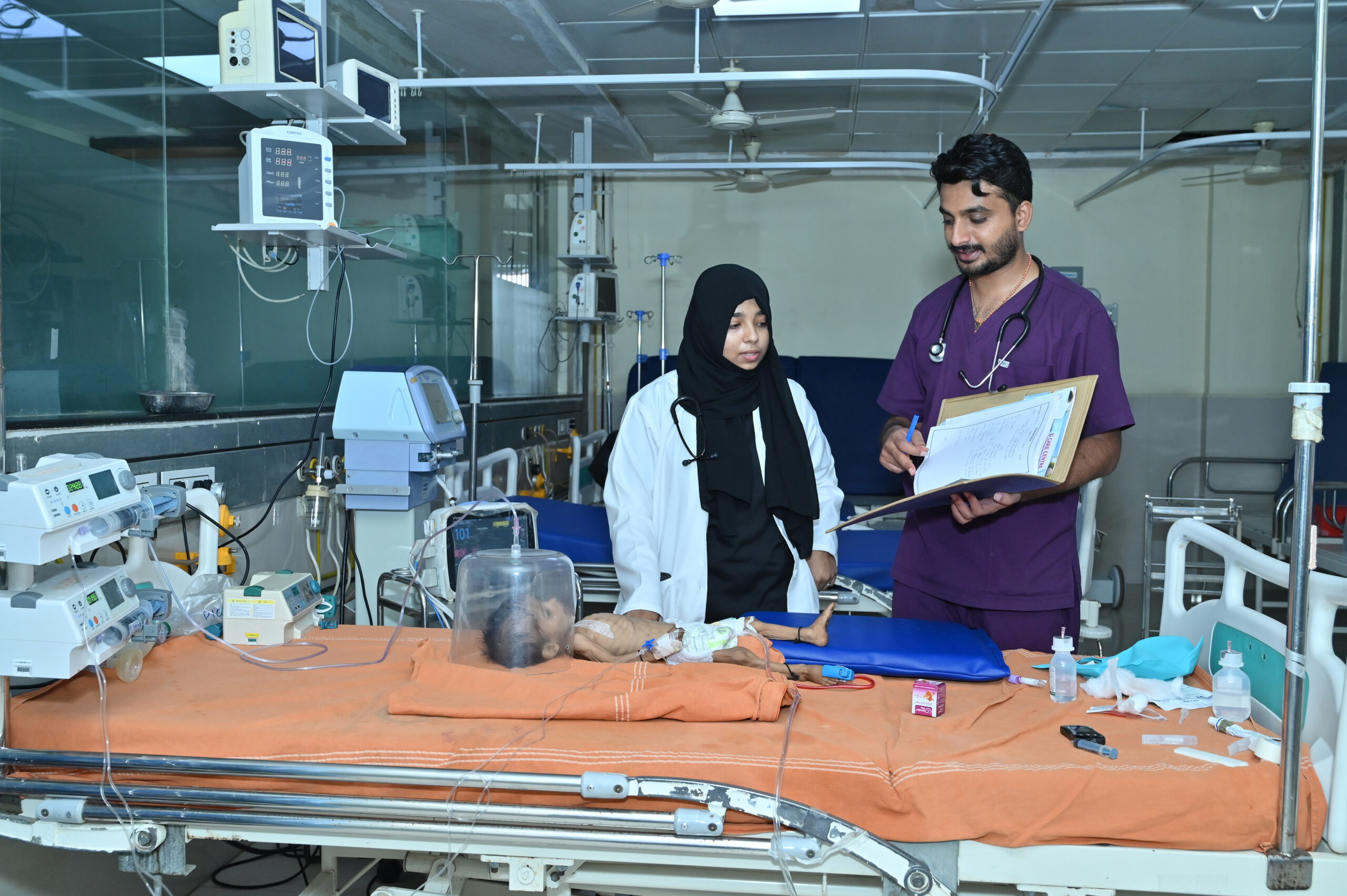
Babies born premature, with a low birth weight, or after a stay in the NICU often need extra watching even after they're discharged and doing well at home. Their growth and development don't always follow the standard timeline seen in full-term babies — a few extra weeks of catching up on weight, a slightly later milestone, or a feeding pattern that needs adjusting are all common, and all worth tracking closely.
Our follow-up team begins by reviewing your baby's birth history, gestational age and NICU course with the family, then plots growth against corrected age and uses structured screening tools to check vision, hearing, motor skills and overall development — building a follow-up schedule that adapts as your baby grows and reaches new milestones.
Every High-Risk Baby Needs a Watchful Plan
High-risk newborns can face very different challenges — from catching up on growth to reaching developmental milestones. Our team evaluates each baby's history individually to build the right follow-up plan.
Select a Condition
A clear, baby-focused approach to tracking growth, feeding and development after a high-risk start.
We review your baby's birth history, gestational age, NICU course and any complications through a focused conversation with the family.
Understanding the birth and NICU history helps map the exact risks your baby faces and guides the next stage of assessment.
Standardized growth charts and developmental screening tools help our specialists assess your baby against corrected age and expected milestones.
Structured growth plotting and developmental screening may be advised to understand your baby's progress in detail.
Based on the assessment, a personalized follow-up schedule is built covering growth tracking, feeding support and developmental milestones.
Follow-up is planned according to birth weight, gestational age and NICU course, and adapted to your baby's individual needs.
Regular follow-up visits track your baby's growth, feeding and developmental progress, and the care plan is adjusted whenever needed.
Regular reviews help monitor growth and development, understand response to guidance, and make changes to the care plan when required.
Meet our team of experienced pediatricians committed to providing attentive, compassionate, and comprehensive care for children at every stage of growth.
40+ Yrs Experience
M.B.B.S., D.C.H.
Consultant & Director
 25+ Yrs Experience
M.B.B.S., D.C.H., F.I.A.P., P.G.P.N. (Boston)
Consultant & Director
 30+ Yrs Experience
M.B.B.S., D.C.H.
Consultant & Director
 27+ Yrs Experience
M.B.B.S., D.C.H., D.N.B.
Consultant & Director

M.B.B.S., D.C.H. (Ped)
Consultant & Director
 25+ Yrs Experience
M.D. (Ped)
Consultant & Director
Leave your details and our care team will contact you to guide you with the next step.
Simple answers to common questions about high-risk newborn follow-up care.
High-risk newborn follow-up is structured, ongoing care for babies born premature, with low birth weight, or after a NICU stay, tracking their growth, feeding and development after discharge to catch concerns early.
Babies born before 37 weeks, those weighing under 2.5 kg at birth, babies who spent time in the NICU, and infants with feeding or growth difficulties typically benefit from a structured follow-up program.
Corrected age adjusts a premature baby's age based on how early they were born, giving a fairer picture of their growth and developmental progress compared to using birth date alone.
Visit frequency depends on gestational age, birth weight and NICU course. High-risk babies are often seen more frequently in the first year, with visits spacing out as growth and milestones stay on track.
An assessment typically includes a review of birth and NICU history, growth charting, feeding evaluation, and structured screening of motor, vision, hearing and developmental milestones.
Yes. With structured follow-up, timely nutrition support and early intervention where needed, most high-risk babies show steady catch-up in growth and developmental milestones over time.