 40+ Yrs Experience
Dr. K. Amarnath
M.B.B.S., D.C.H.
Consultant & Director

Typically replies instantly
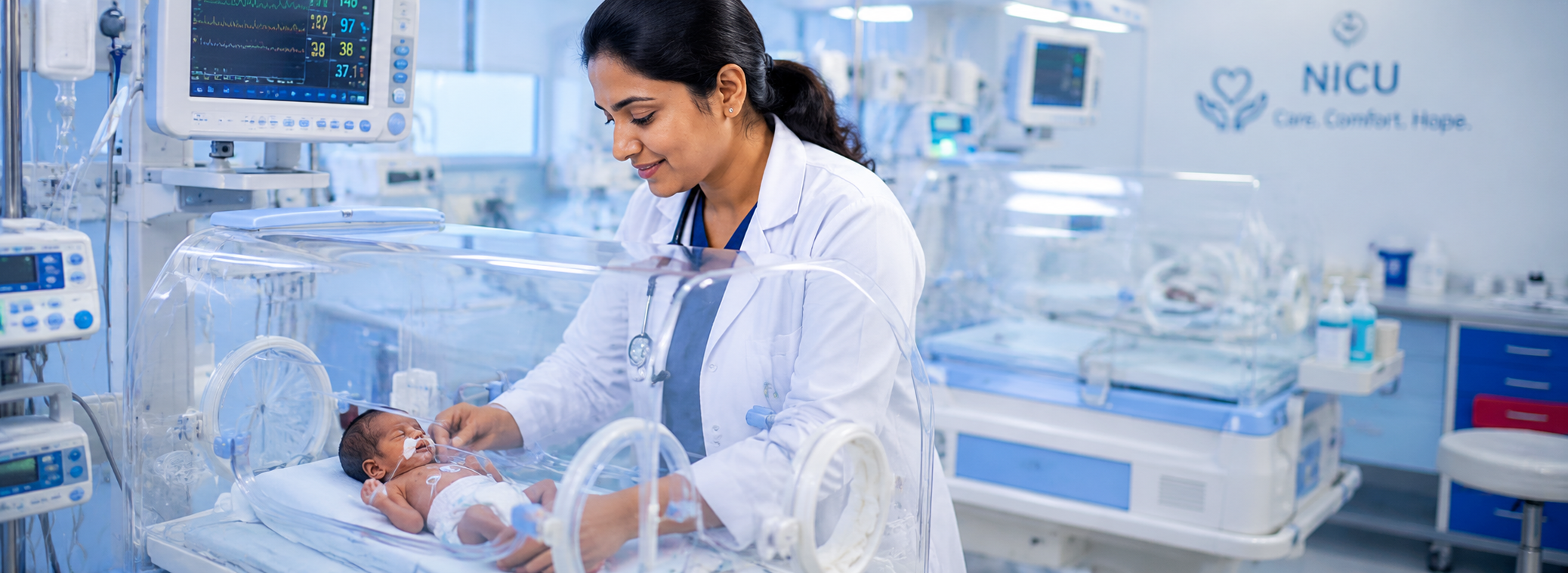
A dedicated NICU for premature and critically ill newborns — continuous monitoring, advanced life support and round-the-clock neonatologist-led care, with parents kept close at every step.
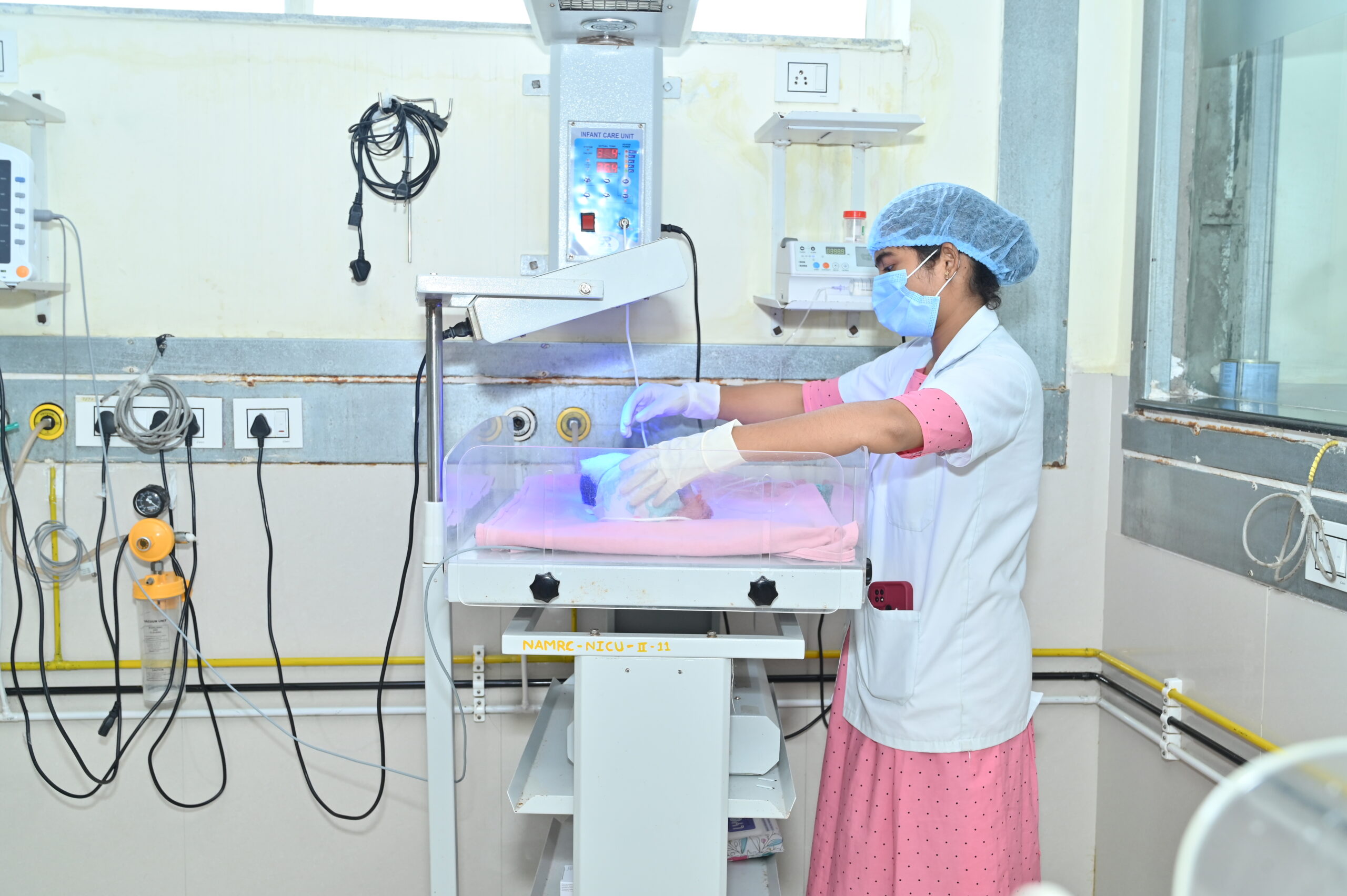
A baby born too early, too small, or struggling to breathe needs more than routine newborn care. They need continuous monitoring, precise temperature and nutrition support, and a team trained specifically for the unique needs of newborns. That is exactly what our Neonatal Intensive Care Unit is built for.
Our NICU team stabilises the baby first, then follows a structured plan — continuous monitoring, targeted investigations and organ-specific support — while keeping parents informed, involved and close through kangaroo care as the baby grows stronger.
Every Newborn Deserves a Team Trained to Respond
From extreme prematurity to congenital conditions, our NICU is equipped to manage the full range of newborn emergencies with continuous monitoring and a rapid, coordinated response.
Select a Condition
A rapid, structured approach to caring for premature and critically ill newborns, from the first minutes of admission through to a safe transition home.
On arrival, our neonatal team quickly assesses breathing, heart rate and temperature to identify how much support the baby needs and begin immediate stabilisation.
A structured newborn assessment identifies the most urgent needs first, so warming, breathing support or other care can begin within minutes of arrival.
Once stabilised, the baby is placed in an incubator or radiant warmer with continuous monitors, and targeted investigations pinpoint the exact cause and extent of the condition.
Heart rate, oxygen levels, temperature and weight are tracked continuously, alongside lab and imaging tests, to guide precise treatment decisions.
Based on the diagnosis, our neonatologists deliver targeted treatment — respiratory support, phototherapy, antibiotics or feeding support — adjusting the plan continuously as the baby responds.
Treatment is fine-tuned around the clock based on how the baby is responding, with the full NICU team reviewing progress at every shift.
As the baby stabilises and gains weight steadily, care shifts toward feeding, kangaroo care and a safe, well-planned transition home, with families guided through every step.
Once critical risk has passed, the team plans the next stage of care and prepares parents with everything they need before discharge.
Meet our team of experienced pediatricians and neonatal intensive care specialists committed to providing attentive, compassionate, and comprehensive critical care for newborns at every stage.
40+ Yrs Experience
M.B.B.S., D.C.H.
Consultant & Director
 25+ Yrs Experience
M.B.B.S., D.C.H., F.I.A.P., P.G.P.N. (Boston)
Consultant & Director
 30+ Yrs Experience
M.B.B.S., D.C.H.
Consultant & Director
 27+ Yrs Experience
M.B.B.S., D.C.H., D.N.B.
Consultant & Director
 25+ Yrs Experience
M.B.B.S., D.C.H. (Ped)
Consultant & Director
 25+ Yrs Experience
M.D. (Ped)
Consultant & Director
Leave your details and our neonatal critical care team will contact you immediately to guide you with the next step.
Simple answers to common questions about our Neonatal Intensive Care Unit and critical care for newborns.
A NICU is a specialised unit for premature or critically ill newborns who need continuous monitoring, advanced life support and round-the-clock care from a dedicated neonatal critical care team.
Newborns are admitted to the NICU for conditions such as prematurity, low birth weight, breathing difficulty, severe jaundice, suspected infection or sepsis, congenital conditions, or the need for close monitoring after a difficult delivery.
A dedicated team of neonatologists, trained NICU nursing staff and support specialists monitor and manage the baby around the clock, adjusting treatment as the baby's condition changes.
Yes. We understand how stressful this time is for families, so parents are kept closely involved and updated, with visiting and kangaroo-care arrangements that balance the baby's medical needs with family bonding.
The NICU uses radiant warmers and incubators, continuous cardiac and respiratory monitoring, phototherapy units, ventilators and other life-support equipment suited to a newborn's size and condition.
Length of stay depends entirely on the condition and how the baby responds to treatment. Some babies are stabilised within a few days, while others — especially those born very premature — require a longer, closely monitored stay before being discharged home.