 40+ Yrs Experience
Dr. K. Amarnath
M.B.B.S., D.C.H.
Consultant & Director

Typically replies instantly

Compassionate evaluation and therapy for eye tracking, binocular vision, visual perception, focusing, convergence and eye-hand coordination difficulties, guided by experienced specialists and a caring team.
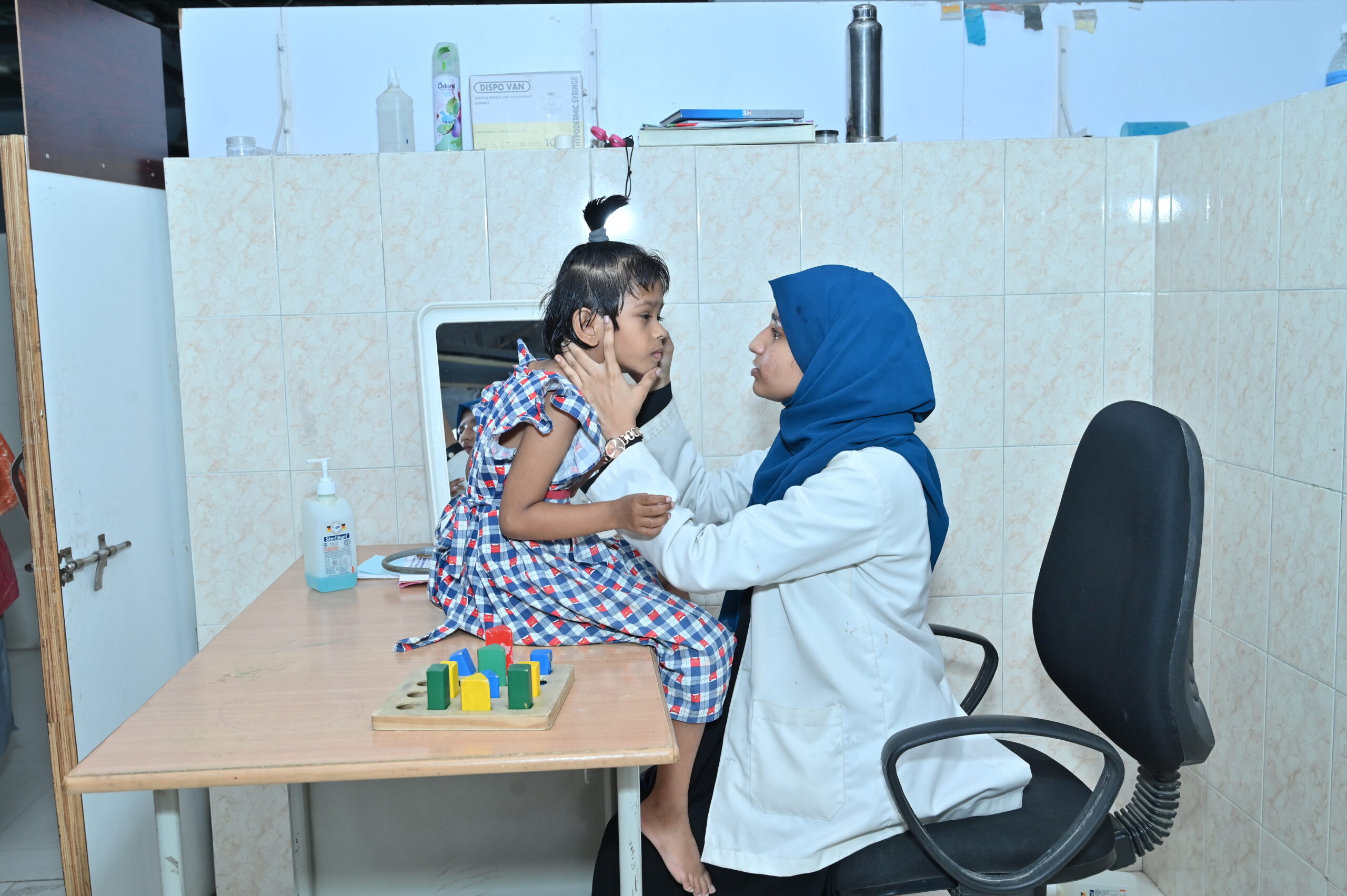
A child who loses their place while reading, avoids near work, complains of headaches, or struggles to catch a ball may have 20/20 eyesight and still be facing a real difficulty in how their eyes track, team and focus together. These difficulties look different from child to child — some struggle with tracking, some with focusing, and others with how the brain processes what the eyes see. That's why care can't start with guesswork.
Our vision therapy team begins with a detailed conversation with the family, supported by standardized tests of eye tracking, teaming, focusing and visual perception, to understand exactly where the difficulty lies before recommending therapy, and adjusts that plan as your child responds, session by session.
Every Child Uses Their Eyes Differently
Visual difficulties can show up in how a child tracks, teams, focuses, or processes what their eyes see. Our team evaluates each pattern individually to build the right plan for your child.
Select a Condition
A clear, child-focused approach to understanding visual difficulties and planning the right support.
We understand your child's reading habits, learning challenges and how they use their eyes for near and far tasks through a focused evaluation with the family.
A careful conversation with the child and family helps map reading difficulty, eye strain, headaches and near-work avoidance to guide the next stage of assessment.
Standardized tests of eye tracking, teaming, focusing and visual perception help our specialists pinpoint exactly where the visual difficulty lies.
Structured vision testing may be advised when clinically required to understand the child's tracking, teaming, focusing and processing profile in detail.
Based on the assessment and the child's specific visual profile, a personalized therapy plan is developed using guided exercises to build tracking, teaming and focusing skills.
Therapy is planned according to whether the difficulty is tracking, teaming, focusing, convergence or visual-motor, and adapted to the child's age and individual needs.
Regular follow-up sessions help track your child's reading comfort, visual stamina and coordination, review response to therapy, and adjust the care plan when needed.
Regular reviews help monitor visual skill progress, understand therapy response, and make changes to the care plan when required.
Meet our team of experienced pediatricians committed to providing attentive, compassionate, and comprehensive care for children at every stage of growth.
40+ Yrs Experience
M.B.B.S., D.C.H.
Consultant & Director
 25+ Yrs Experience
M.B.B.S., D.C.H., F.I.A.P., P.G.P.N. (Boston)
Consultant & Director
 30+ Yrs Experience
M.B.B.S., D.C.H.
Consultant & Director
 27+ Yrs Experience
M.B.B.S., D.C.H., D.N.B.
Consultant & Director

M.B.B.S., D.C.H. (Ped)
Consultant & Director
 25+ Yrs Experience
M.D. (Ped)
Consultant & Director
Leave your details and our care team will contact you to guide you with the next step.
Simple answers to common questions about childhood visual difficulties and vision therapy.
Vision therapy is a structured, progressive program of visual exercises and activities designed to improve how the eyes track, team, focus and communicate with the brain. It goes beyond glasses and treats the visual skills that make reading, learning and coordination easier.
20/20 eyesight only measures how clearly a child sees at a distance. Vision therapy addresses functional visual skills such as eye tracking, teaming, focusing and visual processing, which glasses alone do not correct.
Signs can include losing place while reading, skipping lines or words, headaches or eye strain during near work, avoiding reading, double vision, poor eye-hand coordination, or difficulty copying from the board. A comprehensive evaluation can confirm whether vision therapy is needed.
An assessment typically includes a detailed history with the family, standardized tests of eye tracking, teaming, focusing and visual perception, and structured observation of how the child uses their eyes for reading and near tasks.
Sessions use guided visual exercises, specialized equipment and computer-assisted activities to build eye tracking, teaming, focusing and processing skills gradually, with difficulty increased as the child improves.
Yes. With early evaluation and a therapy plan suited to the specific visual difficulty, most children show measurable improvement in visual comfort, reading fluency and coordination.