 40+ Yrs Experience
Dr. K. Amarnath
M.B.B.S., D.C.H.
Consultant & Director

Typically replies instantly

Compassionate assessment and therapy for delayed speech, social communication difficulties, nonverbal communication challenges and AAC needs, guided by experienced specialists and a caring team.
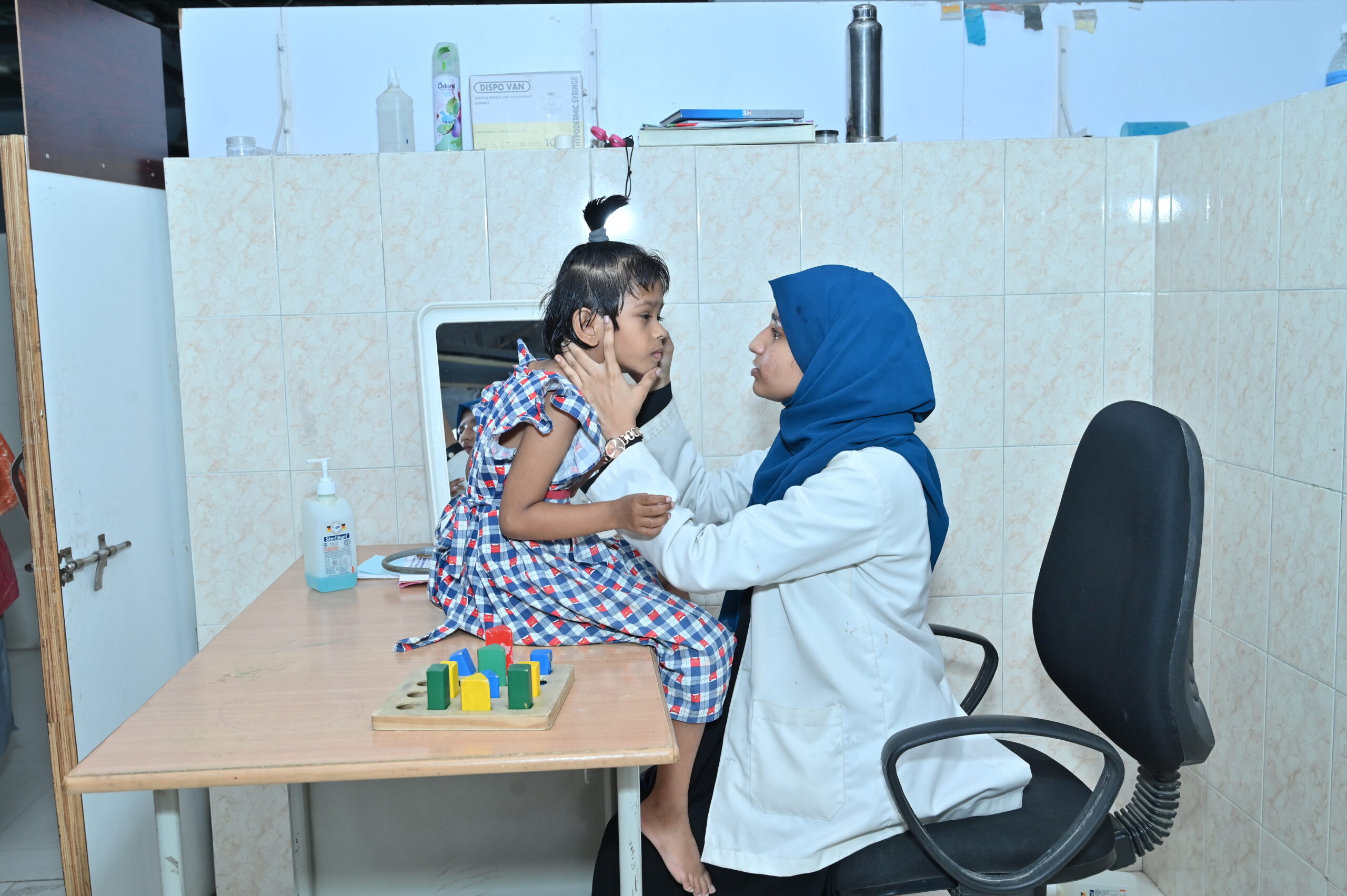
A quiet child may simply be shy — or may be struggling to find the words. A child who repeats phrases, avoids eye contact, or relies on gestures instead of speech may be communicating in the only way that currently feels possible to them. No two children show communication difficulty in quite the same way, which is why care can't start with a one-size-fits-all approach.
Our speech and language team begins with a detailed conversation with the child and family, supported by structured language assessments where needed, to understand exactly where the gap lies before recommending therapy — then adjusts that plan as your child responds, session by session.
Speech Is Our Starting Point, Not Our Only Focus
Communication difficulties in children rarely fit one label — they often overlap with social, sensory or developmental concerns. Our team evaluates each one with the same careful, child-first approach.
Select a Condition
A clear, child-focused approach to understanding communication concerns and planning the right support.
We understand your child's speech and language history, developmental milestones and communication patterns through a focused evaluation.
A careful conversation with the child and family helps map speech, language and social communication patterns to guide the next stage of assessment.
When required, standardized language tests and communication observation help our specialists better understand your child's condition.
Structured language assessments may be advised when clinically required to better understand the child's communication profile.
Based on the assessment and individual needs, a personalized therapy plan is developed to provide appropriate speech and language support.
Therapy is planned according to the assessment findings, symptoms, and individual communication needs of the child.
Regular follow-up sessions help monitor your child's progress, review response to therapy, and adjust the care plan when needed.
Regular reviews help monitor communication progress, understand therapy response, and make changes to the care plan when required.
Meet our team of experienced pediatricians committed to providing attentive, compassionate, and comprehensive care for children at every stage of growth.
40+ Yrs Experience
M.B.B.S., D.C.H.
Consultant & Director
 25+ Yrs Experience
M.B.B.S., D.C.H., F.I.A.P., P.G.P.N. (Boston)
Consultant & Director
 30+ Yrs Experience
M.B.B.S., D.C.H.
Consultant & Director
 27+ Yrs Experience
M.B.B.S., D.C.H., D.N.B.
Consultant & Director

M.B.B.S., D.C.H. (Ped)
Consultant & Director
 25+ Yrs Experience
M.D. (Ped)
Consultant & Director
Leave your details and our care team will contact you to guide you with the next step.
Simple answers to common questions about childhood communication and speech-language care.
Communication disorders affect how a child understands, uses or produces speech and language. They can involve delayed speech, difficulty using language socially, or challenges expressing needs clearly.
No. Children develop language at different paces. A speech and language evaluation can help understand whether the delay needs further assessment or support.
Consider an evaluation for limited vocabulary for age, difficulty holding conversations, trouble understanding social cues, unclear speech, or reliance on gestures instead of words past the expected age.
An assessment may include structured conversation, standardized language tests and observation of how the child communicates in different settings, to understand strengths and gaps.
Yes. Treatment depends on the type of difficulty and the child's individual needs, and may include speech-language therapy, AAC support, and family guidance planned by the specialist.
Regular follow-ups help track communication progress, review how the child is responding to therapy, and adjust the care plan when required.