 40+ Yrs Experience
Dr. K. Amarnath
M.B.B.S., D.C.H.
Consultant & Director

Typically replies instantly
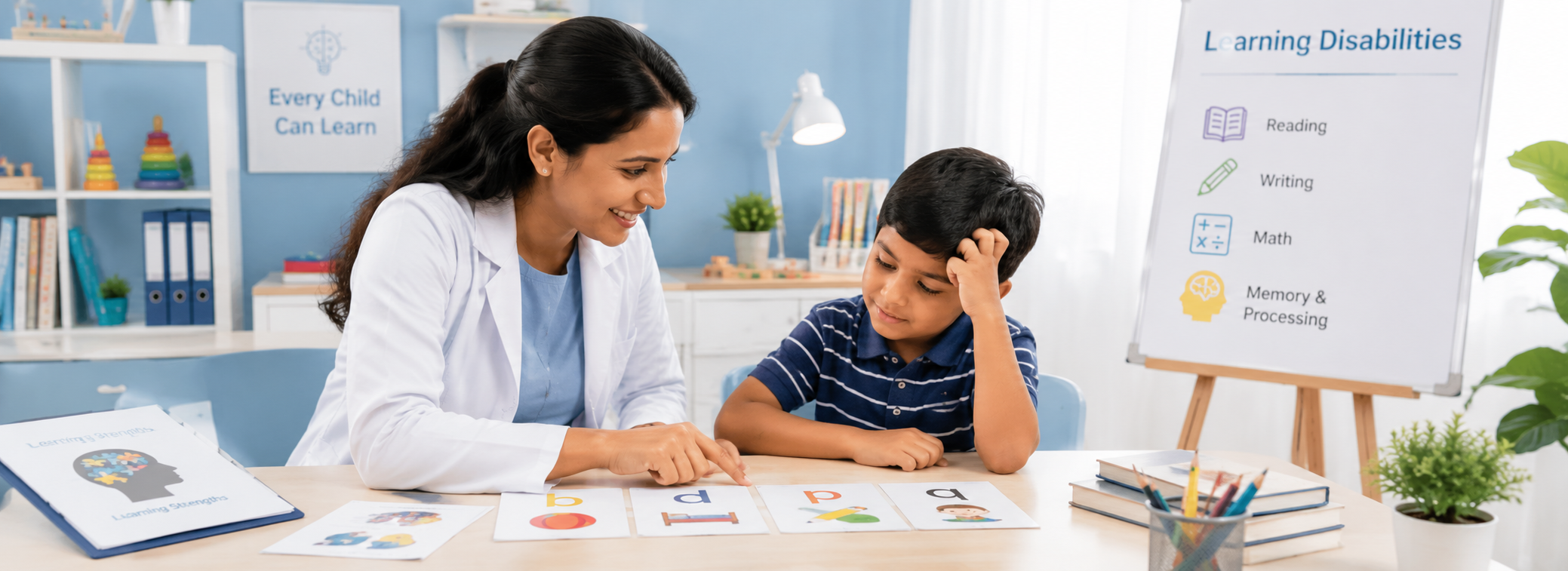
Expert assessment and compassionate support for dyslexia, dysgraphia, dyscalculia and related learning difficulties, backed by psychoeducational testing and individualized learning plans.
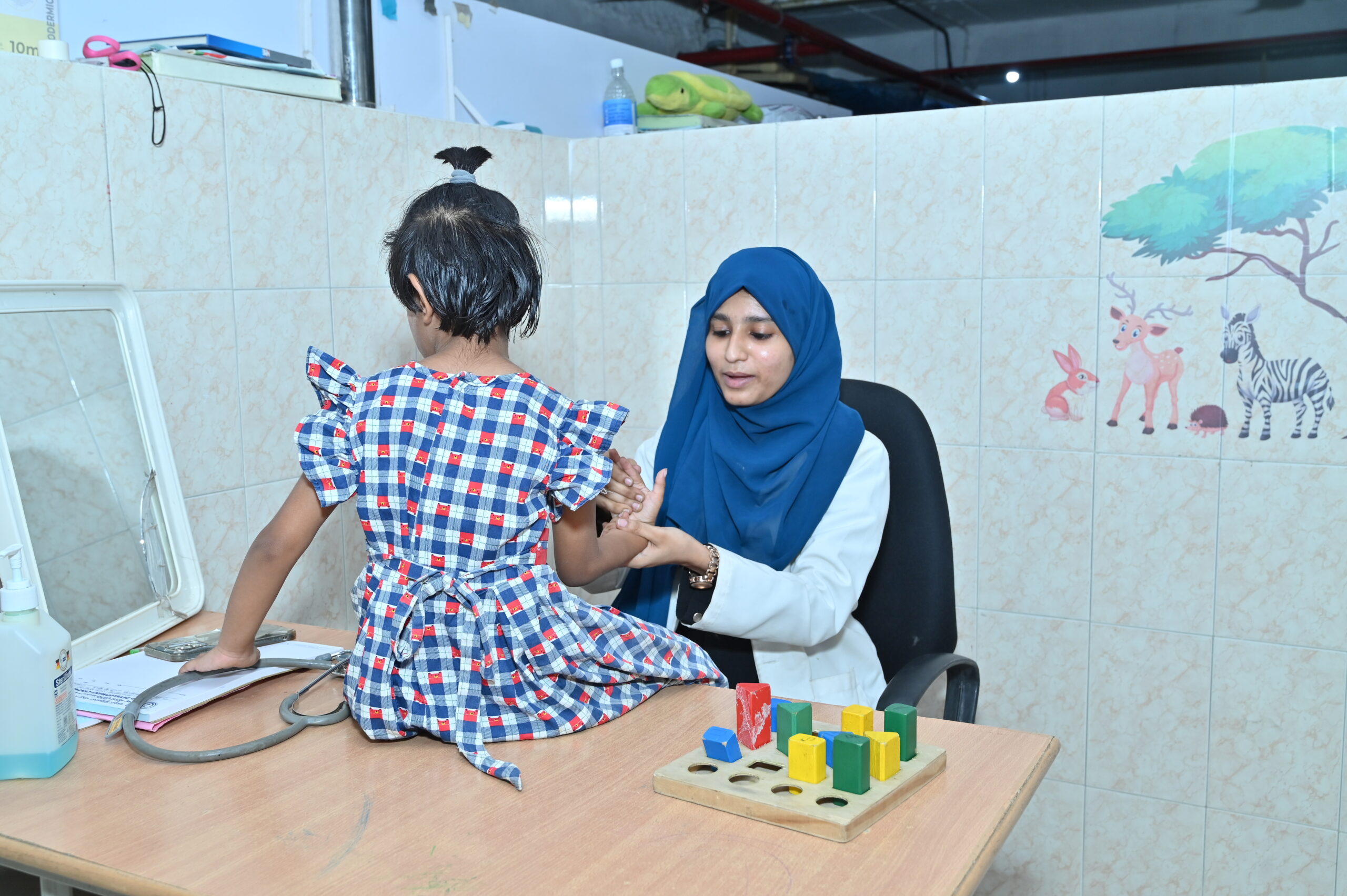
A child who struggles to read, write or work with numbers isn't "not trying hard enough" — learning disabilities are real, specific differences in how the brain processes information, and they show up differently in every child. They are not linked to intelligence, and they often overlap with attention difficulties such as ADHD.
Our team begins with a detailed developmental and academic history, backed by psychoeducational and cognitive testing where needed, to identify the exact nature of the difficulty before recommending a learning plan — then adjusts that plan as your child progresses, review by review.
Reading, Writing and Numbers Are Our Starting Point, Not Our Only Focus
Learning difficulties rarely travel alone — they can sit alongside attention concerns like ADHD, speech, or developmental issues. Our team evaluates each one with the same evidence-based diagnostic rigor.
Select a Condition
A clear, child-focused approach to understanding learning difficulties and planning the right support.

We understand your child's academic history, learning struggles, developmental milestones and behaviour through a focused evaluation.
A careful review of learning history, developmental milestones, and previous concerns helps guide the next stage of assessment.
When required, standardised cognitive and academic testing helps our specialists identify the specific type of learning difficulty.
Cognitive and academic testing may be advised when clinically required to better understand the specific learning disability.
Based on the assessment and individual needs, a personalized learning plan is developed with remedial strategies and therapy inputs.
The plan is built according to the diagnosis, academic level, and individual learning needs of the child.
Regular follow-up visits help monitor your child's academic progress, review the plan's effectiveness, and adjust support when needed.
Regular reviews help monitor progress, understand response to the plan, and make changes when required, in coordination with school.
Meet our team of experienced pediatricians committed to providing attentive, compassionate, and comprehensive care for children at every stage of growth.
40+ Yrs Experience
M.B.B.S., D.C.H.
Consultant & Director
 25+ Yrs Experience
M.B.B.S., D.C.H., F.I.A.P., P.G.P.N. (Boston)
Consultant & Director
 30+ Yrs Experience
M.B.B.S., D.C.H.
Consultant & Director
 27+ Yrs Experience
M.B.B.S., D.C.H., D.N.B.
Consultant & Director
 25+ Yrs Experience
M.B.B.S., D.C.H. (Ped)
Consultant & Director
 25+ Yrs Experience
M.D. (Ped)
Consultant & Director
Leave your details and our care team will contact you to guide you with the next step.
Simple answers to common questions about learning disabilities and developmental care.
Learning disabilities are neurologically-based differences in how a child processes information, affecting specific skills like reading, writing or math, even when overall intelligence is normal.
No. Learning disabilities are unrelated to a child's overall intelligence. They affect how specific information is processed, not how intelligent the child is.
Consider an assessment if your child struggles significantly with reading, writing, math, attention or following instructions despite regular effort and support at school.
It is a structured evaluation combining cognitive and academic testing that helps identify the specific type of learning difficulty a child may have.
Learning disabilities are managed rather than cured, through individualized teaching strategies, therapy support and classroom accommodations suited to the child.
Regular follow-ups help track academic and developmental progress, review how the learning plan is working, and adjust support as the child grows.